
From Air Cooling to Liquid Cooling: Why High-Performance Systems Need Advanced Quick Disconnect Solutions
As computing power continues to increase, traditional air cooling technologies are facing significant challenges in managing higher thermal loads. With the rapid development of AI, HPC, and advanced data centers, the power consumption of next-generation processors and GPUs continues to rise, creating increasing demands for more efficient thermal management solutions.
Compared with conventional air cooling, liquid cooling technology offers higher heat dissipation efficiency, lower energy consumption, reduced noise levels, and lower TCO, making it an essential solution for high-power density systems.
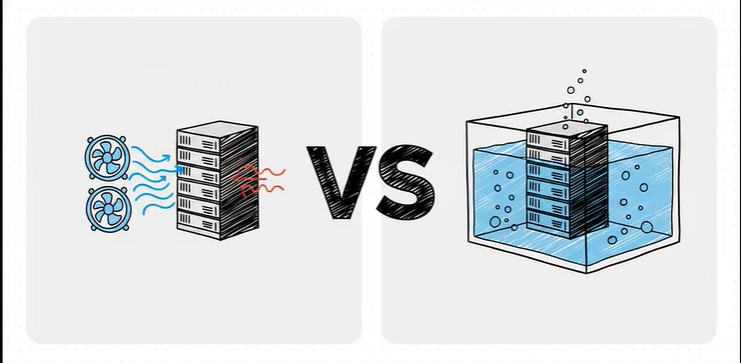
Thermal management technologies mainly include air cooling, liquid cooling, heat pipe cooling, and phase-change cooling. Among them, air cooling and liquid cooling are the most widely adopted solutions.
As computing power and thermal density continue to increase, traditional air cooling is becoming insufficient for next-generation high-performance systems. Liquid cooling provides superior heat dissipation, higher energy efficiency, and better temperature control, making it the preferred thermal management solution for AI infrastructure, high-performance computing, and advanced energy systems.
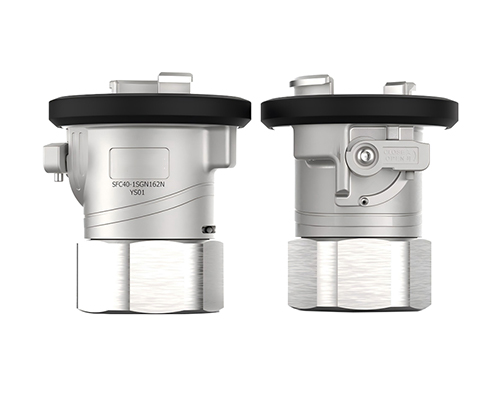
Within a liquid cooling system, quick disconnect connectors serve as critical fluid interface components, ensuring reliable coolant circulation while enabling fast and tool-free connection and disconnection.
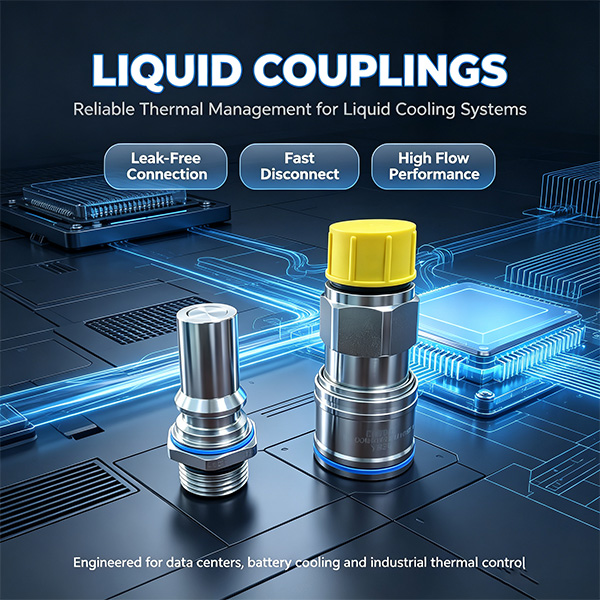
Different liquid cooling architectures require quick connectors with different performance characteristics. In cold plate liquid cooling systems, which are widely adopted in AI servers and HPC applications, connectors must provide high pressure resistance, low pressure drop, and compatibility with common coolants such as deionized water and water-glycol mixtures. For immersion and spray cooling systems, connectors require enhanced corrosion resistance, sealing reliability, and mechanical durability to adapt to different cooling fluids and operating environments.
Beyond their role as fluid connection interfaces, liquid cooling quick connectors must also meet different operational requirements depending on application scenarios. As liquid cooling systems expand from traditional data centers to AI computing infrastructure, edge computing, and industrial equipment, connector designs continue to evolve toward higher reliability, compact integration, and easier maintenance.
Beyond providing simple fluid connections, the performance of quick connectors directly impacts the safety, efficiency, and scalability of the entire liquid cooling system. Key characteristics such as leak prevention, low flow resistance, standardization, and alignment capability determine the reliability of next-generation liquid cooling infrastructure.
Reliable Leak Prevention for System Safety
Leakage prevention is one of the most critical requirements for liquid cooling connectors, especially in applications where coolant is in close proximity to sensitive electronic components.
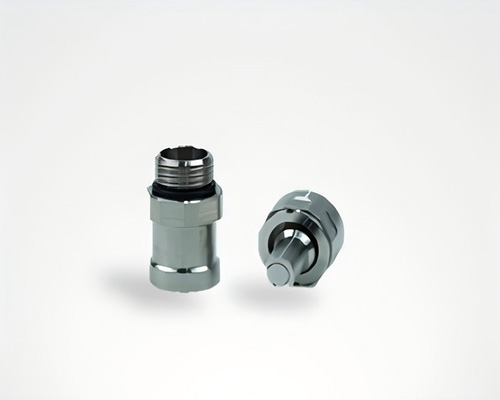
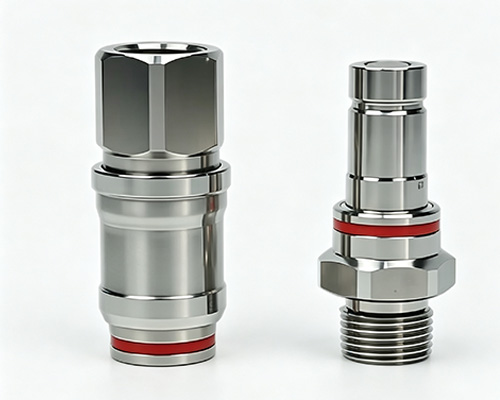
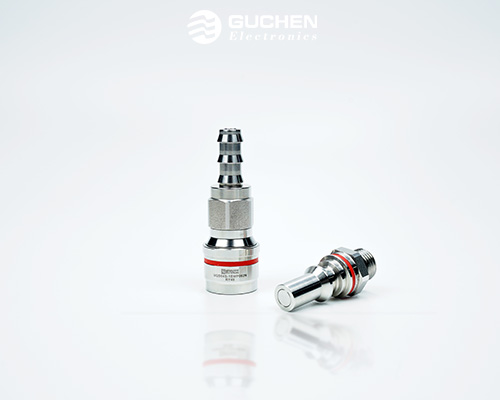
Guchen liquid cooling quick connectors utilize a double shut-off valve design that automatically seals both sides when disconnected, minimizing coolant loss and preventing liquid leakage. This zero-drip structure effectively protects high-value electronic components from potential risks such as short circuits, corrosion, and system failures, ensuring safe and reliable operation during maintenance and replacement.
Optimized Flow Path for Higher Cooling Efficiency
Efficient coolant circulation is essential for removing heat from high-power components such as AI GPUs and processors.
Through optimized internal flow channel design, Guchen liquid cooling quick connectors achieve lower pressure drop and reduced flow resistance. The streamlined fluid path improves coolant flow efficiency, reduces pump energy consumption, and helps maintain stable thermal performance under high heat loads.
Standardized Compatibility and Error-Proof Integration
As liquid cooling systems continue to expand across different platforms and manufacturers, connector compatibility and installation reliability become increasingly important.
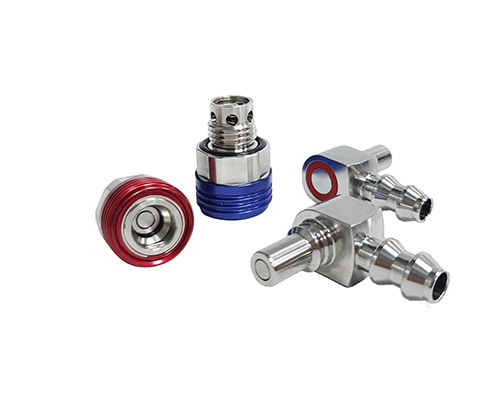
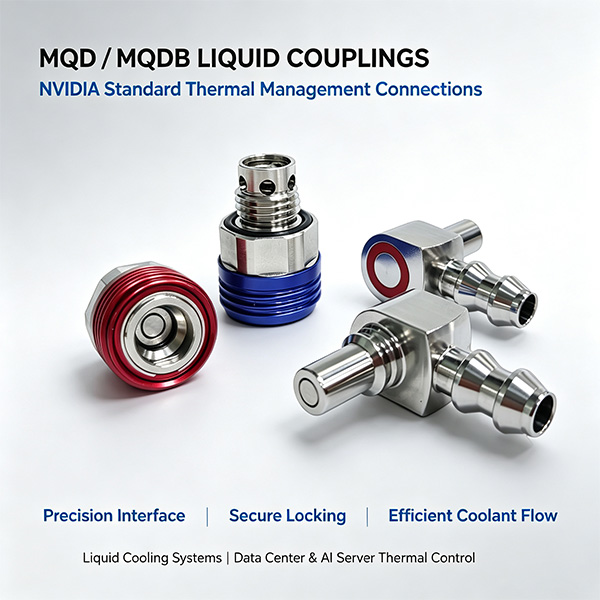
Guchen liquid cooling quick connectors support standardized interface designs, including compatibility with industry-recognized specifications such as OCP UQD. Integrated anti-mismatch features, including color identification and mechanical keying structures, help prevent incorrect connections during installation and maintenance.
These design features enable easier integration across different cooling architectures, reduce operational risks, and lower system deployment and maintenance costs.
Compared with conventional air cooling, liquid cooling technology offers higher heat dissipation efficiency, lower energy consumption, reduced noise levels, and lower TCO, making it an essential solution for high-power density systems.
Liquid Cooling vs. Traditional Air Cooling
| Comparison Item | Liquid Cooling | Traditional Air Cooling |
| Cooling Principle | Uses circulating coolant to directly absorb and transfer heat from high-power components through cold plates, pipelines, and heat exchangers. | Uses fans to generate airflow and remove heat through heat sinks and air channels. |
| Heat Dissipation Performance | Excellent heat transfer capability. Liquids have higher heat capacity and thermal conductivity, enabling rapid heat removal from high-power components. | Limited heat transfer capability. Cooling performance depends heavily on airflow efficiency, fan speed, and ambient temperature. |
| Temperature Control Accuracy | Provides more precise and uniform temperature management, effectively reducing temperature differences and preventing localized hotspots. | Temperature control is less accurate due to uneven airflow distribution, making hotspots more likely under high workloads. |
| Cooling Efficiency | Suitable for high thermal loads and high-power-density systems, maintaining stable performance during continuous operation. | Suitable for low- to medium-power applications where heat generation remains within manageable levels. |
| Energy Consumption | Requires less fan power and can achieve higher cooling efficiency with lower overall energy consumption, helping reduce operating costs. | Requires high-speed fans to maintain airflow, resulting in higher auxiliary power consumption in high-density systems. |
| Noise Level | Lower operating noise because it reduces dependence on high-speed fans, making it suitable for noise-sensitive environments. | Higher noise levels caused by continuous fan operation, especially in large-scale systems. |
| Space Utilization | Compact design with fewer airflow restrictions, enabling higher equipment density and more efficient use of rack space. | Requires larger airflow channels and ventilation space, limiting equipment density. |
| Environmental Adaptability | Sealed circulation design provides better protection against dust, humidity, and harsh environments. | More sensitive to dust, humidity, and contaminants that can reduce cooling efficiency and increase maintenance requirements. |
| System Reliability | Provides stable thermal performance, reduces thermal stress on components, and helps extend equipment lifespan. | Performance may decrease over time due to dust accumulation, fan aging, and environmental changes. |
| Initial Investment Cost | Higher initial cost due to additional components such as pumps, cooling plates, manifolds, pipelines, and quick connectors. | Lower initial cost with simpler structures including fans, heat sinks, and air ducts. |
| Maintenance Requirements | Requires inspection of coolant quality, pipelines, and connection points to ensure long-term reliability. | Requires routine cleaning of filters and replacement of aging fans. |
| Total Cost of Ownership (TCO) | Higher upfront investment but can provide lower long-term operating costs through improved efficiency, reliability, and reduced downtime. | Lower initial investment but may result in higher energy consumption for high-power applications. |
| Typical Applications | AI data centers, HPC systems, supercomputers, semiconductor equipment, BESS, power electronics, and other high-density thermal management applications. | Office computers, household electronics, conventional servers, and low- to medium-power systems. |
As computing power and thermal density continue to increase, traditional air cooling is becoming insufficient for next-generation high-performance systems. Liquid cooling provides superior heat dissipation, higher energy efficiency, and better temperature control, making it the preferred thermal management solution for AI infrastructure, high-performance computing, and advanced energy systems.
Within a liquid cooling system, quick disconnect connectors serve as critical fluid interface components, ensuring reliable coolant circulation while enabling fast and tool-free connection and disconnection.
The Role of Liquid Cooling Quick Connectors
Positioned between cold plates, manifolds, CDUs, and coolant pipelines, quick connectors enable fast and tool-free connection and disconnection while maintaining reliable sealing performance and optimized coolant flow.| Application Location | Role of Liquid Cooling Quick Connectors | Key Benefits |
| Cold Plate ↔ Manifold / Coolant Pipeline | Connects server cold plates with rack-level manifolds to enable coolant supply and return between heat sources and cooling infrastructure. | Ensures efficient heat transfer, stable coolant circulation, and simplified maintenance. |
| CDU ↔ External Cooling Loop | Provides reliable connections between coolant distribution units and external coolant pipelines. | Supports modular system expansion, faster installation, and easier service operations. |
| Board-Level ↔ Rack-Level Cooling Interface | Enables quick connection between internal cooling modules and rack-level liquid cooling systems in modular servers. | Improves deployment flexibility and reduces downtime during equipment replacement. |
Different liquid cooling architectures require quick connectors with different performance characteristics. In cold plate liquid cooling systems, which are widely adopted in AI servers and HPC applications, connectors must provide high pressure resistance, low pressure drop, and compatibility with common coolants such as deionized water and water-glycol mixtures. For immersion and spray cooling systems, connectors require enhanced corrosion resistance, sealing reliability, and mechanical durability to adapt to different cooling fluids and operating environments.
Beyond their role as fluid connection interfaces, liquid cooling quick connectors must also meet different operational requirements depending on application scenarios. As liquid cooling systems expand from traditional data centers to AI computing infrastructure, edge computing, and industrial equipment, connector designs continue to evolve toward higher reliability, compact integration, and easier maintenance.
| Application Scenario | Requirements for Liquid Cooling Quick Connectors | Typical Solutions |
| AI Data Centers and High-Density Computing Centers | Require compact, lightweight, and highly reliable connectors to fit limited rack space and support high-density deployment. Blind-mate connectors enable automatic alignment between server nodes and rack manifolds, allowing "push-to-connect" installation and reducing maintenance time. | Miniaturized QDs, MQD, UQDB blind-mate connectors |
| Edge Data Centers | Require high reliability, low flow resistance, and long-term unattended operation. Smart connectors with integrated pressure, temperature, and leakage monitoring capabilities can support remote monitoring and predictive maintenance. | Intelligent QD solutions with sensing capability |
| Testing Platforms and Industrial Equipment | Require high mating-cycle durability, minimal coolant residue, and reliable connection performance during frequent installation and replacement operations. | High-cycle QDs with low leakage and drip-free disconnection |
Beyond providing simple fluid connections, the performance of quick connectors directly impacts the safety, efficiency, and scalability of the entire liquid cooling system. Key characteristics such as leak prevention, low flow resistance, standardization, and alignment capability determine the reliability of next-generation liquid cooling infrastructure.
Advanced Design Features of Guchen Liquid Cooling Quick Connectors
To ensure the reliability and efficiency of modern liquid cooling systems, Guchen liquid cooling quick connectors are designed with advanced fluid management technologies focusing on leakage prevention, flow optimization, and system compatibility. These design features help maintain stable cooling performance while simplifying installation, operation, and maintenance in high-density applications such as AI data centers, HPC systems, and advanced power electronics.Reliable Leak Prevention for System Safety
Leakage prevention is one of the most critical requirements for liquid cooling connectors, especially in applications where coolant is in close proximity to sensitive electronic components.
Guchen liquid cooling quick connectors utilize a double shut-off valve design that automatically seals both sides when disconnected, minimizing coolant loss and preventing liquid leakage. This zero-drip structure effectively protects high-value electronic components from potential risks such as short circuits, corrosion, and system failures, ensuring safe and reliable operation during maintenance and replacement.
Optimized Flow Path for Higher Cooling Efficiency
Efficient coolant circulation is essential for removing heat from high-power components such as AI GPUs and processors.
Through optimized internal flow channel design, Guchen liquid cooling quick connectors achieve lower pressure drop and reduced flow resistance. The streamlined fluid path improves coolant flow efficiency, reduces pump energy consumption, and helps maintain stable thermal performance under high heat loads.
Standardized Compatibility and Error-Proof Integration
As liquid cooling systems continue to expand across different platforms and manufacturers, connector compatibility and installation reliability become increasingly important.
Guchen liquid cooling quick connectors support standardized interface designs, including compatibility with industry-recognized specifications such as OCP UQD. Integrated anti-mismatch features, including color identification and mechanical keying structures, help prevent incorrect connections during installation and maintenance.
These design features enable easier integration across different cooling architectures, reduce operational risks, and lower system deployment and maintenance costs.
Message
If you are interested in our products, please fill in the message form below. Our sales representative will contact you within 24 hours.